
A2 Ghee is becoming a familiar name for people who prefer traditional Indian dairy products. But the term can still raise a few questions. What exactly is A2 Ghee? How is it different from regular cow ghee? What does the Bilona method mean? And how much should you expect to pay for it?
At Star Dairy Farms, we work with these questions every day because our product range includes A2 Cow Ghee, Pure A2 Gir Cow Ghee, A2 Bilona Cow Ghee, Gir Bilona Ghee, Gir Desi Cow Ghee, Organic Ghee and other cow ghee products. We supply these products for household use as well as retail, wholesale, distribution and bulk requirements.
A2 Ghee is closely connected with the type of beta-casein protein found in the milk used to make it. The preparation method, source of milk and handling of the product also matter when buyers compare different ghee products.
Here, we want to explain A2 Ghee in simple terms, including how we make it, what affects its price, how it is commonly used and what buyers should check before purchasing it.
 UDYAM
UDYAM ISO
ISO FSSAI
FSSAI FDA
FDA FDA APPROVED
 APEDA
APEDA IEC
IEC GST
GSTWhat Is A2 Ghee?
A2 Ghee is ghee prepared from milk associated with the A2 type of beta-casein protein. A2 describes the type of beta-casein in the source milk; it does not refer to a separate type of fat.
Once the milk is processed into butter or makkhan and the butter is clarified, the result is ghee. The final taste, aroma and texture can vary depending on the milk source and the way the ghee is prepared.
This is where terms such as A2 Cow Ghee, Gir A2 Ghee, Pure A2 Gir Cow Ghee and A2 Bilona Ghee come into the picture. Gir cows are commonly associated with A2 milk, while Bilona refers to a traditional method of preparing butter from curd before converting it into ghee.
At Star Dairy Farms, our range includes A2 Cow Ghee and A2 Bilona Cow Ghee along with several Gir cow ghee products.
One point is worth keeping clear when discussing the benefits of A2 products. A2 refers to the beta-casein type in the source milk, so it should not automatically be treated as a guarantee of special health results. Research has found some differences in digestive symptoms between A1 and A2 milk, while evidence for many broader health claims remains limited.
About Star Dairy Farms
We started Star Dairy Farms in 2024 in Jagdalpur, Chhattisgarh, India. Our work is centred around cow ghee and other cow-based products, with a focus on supplying products for customers and businesses that prefer traditional Indian dairy options.
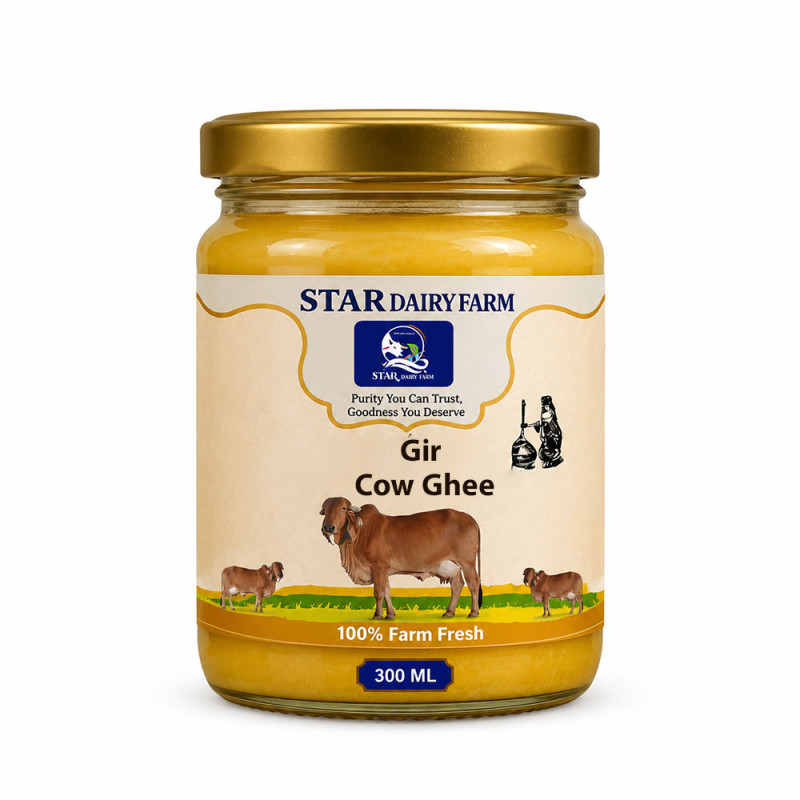
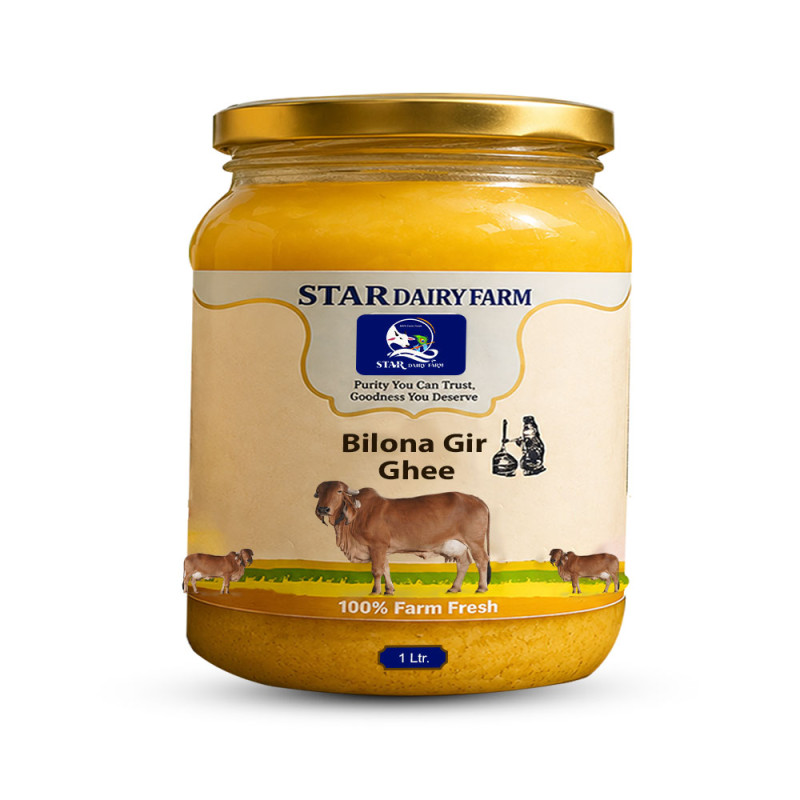
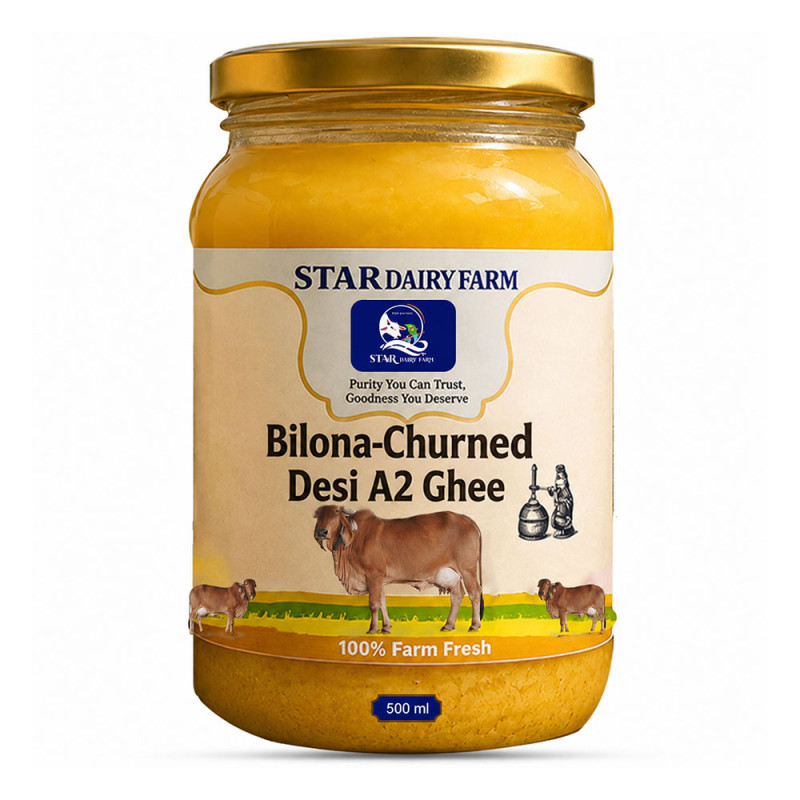
Our product range includes A2 Cow Ghee, Pure A2 Gir Cow Ghee, Bilona Cow Ghee, Organic Cow Ghee, Gir Cow Ghee, Gir Desi Cow Ghee and A2 Bilona Cow Ghee. We work with wholesalers, distributors, retailers, exporters, supermarkets, food businesses and other bulk buyers.
Features of Star Dairy Farms
- A2 Cow Ghee manufacturing and supply
- Pure A2 Gir Cow Ghee
- Traditional Bilona Ghee products
- Gir Desi Cow Ghee
- Organic Cow Ghee options
- Retail and bulk packaging
- Wholesale supply for businesses
- Domestic and export enquiries
- Food-grade product packaging
- Products for household and commercial use
For us, supplying ghee is not limited to putting a product in a jar. Buyers also need the right quantity, packaging and supply arrangement for their purpose. A household buyer may need a smaller pack, while a retailer, distributor, restaurant or exporter may be looking for larger quantities.
How Is A2 Ghee Made?
The making of ghee starts with the milk, but the process can take different routes depending on the method being followed. Bilona Ghee is associated with a traditional process in which curd is churned to separate butter before that butter is clarified.
Here is the process in simple terms.
1. A2 Milk Is Collected
The process starts with milk associated with A2 beta-casein. For products such as Gir Cow Ghee and Pure A2 Gir Cow Ghee, Gir cow milk is used as the source.
Milk quality matters because it is the starting material for the final product.
2. Milk Is Converted Into Curd
For traditional Bilona preparation, the milk is first converted into curd. This is one of the main differences between the traditional Bilona approach and methods that use separated cream directly.
The curd is then ready for the next stage.
3. Curd Is Churned
The curd is churned to separate the butter or makkhan. This step gives the Bilona method its name and traditional character.
The butter is collected separately before moving on to the clarification stage.
4. Butter Is Heated
The butter is heated so that its moisture reduces and the milk solids separate from the fat.
Temperature and handling during this stage affect the final colour, aroma and texture of the ghee.
5. Ghee Is Separated and Filtered
After clarification, the ghee is separated from the remaining milk solids and filtered. What remains is the finished ghee, ready for packing and use.
This is the basic traditional process behind products such as A2 Bilona Cow Ghee and Gir Bilona Ghee.
A2 Ghee vs Regular Cow Ghee
The terms can sometimes be confusing because both products are cow ghee.
The key difference is the milk description. A2 Ghee refers to ghee made from milk associated with the A2 beta-casein type. Regular cow ghee is a broader term and does not by itself specify the beta-casein type.
The preparation method can also differ. A ghee product may be prepared using a cream-based process, while traditional Bilona ghee involves curd and churning before clarification.
| Feature | A2 Cow Ghee | A2 Bilona Ghee |
|---|---|---|
| Milk source | Milk associated with A2 beta-casein | Milk associated with A2 beta-casein |
| Preparation | Can vary by product | Traditional curd-churning process |
| Butter stage | Depends on method | Butter is obtained by churning curd |
| Taste and aroma | Depends on milk and processing | Commonly associated with a traditional ghee character |
| Common uses | Cooking and food preparation | Cooking and traditional recipes |
| Buying consideration | Milk source and processing | Milk source, Bilona process and processing quality |
So, if you are comparing products, looking only at the word “A2” is not enough. The source, preparation method, ingredients, packaging and supplier information should also be checked.
What Are the Benefits of A2 Ghee?
Ghee has been used in Indian cooking for generations. It adds a particular aroma and richness to food and works well in many everyday recipes.
People choose A2 Cow Ghee for several practical reasons.
Rich Taste and Aroma
A good ghee can change the character of a simple meal. A small amount added to dal, rice, khichdi or roti gives the food a familiar buttery aroma and taste.
Useful for Everyday Cooking
Ghee can be used for tadka, sautéing, cooking and several Indian recipes. It is also commonly used while preparing sweets and festive foods.
Suitable for Traditional Recipes
Many Indian dishes traditionally use ghee as part of their preparation. From halwa and laddoo to dal and khichdi, it remains a regular ingredient in many kitchens.
A Traditional Dairy Product
For buyers who prefer traditional food products, Gir Bilona Ghee and A2 Bilona Ghee offer a preparation style connected with traditional Indian dairy processing.
Provides Dietary Fat
Ghee is concentrated milk fat, so it provides energy and fat as part of the diet. At the same time, portion size matters because ghee is calorie-dense.
A2 Ghee should also not be presented as a treatment for medical conditions. Research into A1 and A2 beta-casein is still developing. A systematic review found moderate-certainty evidence regarding some digestive effects but low or very low certainty for several other health outcomes.
What Is the A2 Ghee Price in India?
There is no single A2 Ghee price that applies to every product. The price changes according to the milk source, cow breed, preparation method, packaging size and quantity being purchased.
The Bilona process can also influence pricing because it involves additional processing steps compared with some other ghee-making methods.
For 2026, the indicative wholesale figures published by us are around ₹650–₹950 for 500 ml, ₹900–₹1,600 for 1 litre, and ₹5,500–₹8,500 for 5 litres. These are indicative ranges, not fixed prices. Actual quotations can change depending on the product, order quantity and other purchasing requirements.
For a business buyer, retail price alone does not tell the complete story. Packaging, order size and supply requirements should be considered before comparing quotations.
What Should You Check Before Buying A2 Ghee?
The word “A2” should not be the only thing you look at when selecting a ghee product.
A few practical checks can make the buying process easier:
- Check the stated milk source.
- Check whether the product uses the Bilona method.
- Read the ingredient and product information.
- Look at the packaging size.
- Check storage instructions.
- Compare pricing according to quantity.
- For bulk purchases, ask about available pack sizes.
- Discuss delivery and order requirements before placing a commercial order.
For retailers and distributors, consistency across repeat orders can be just as important as the initial price.
A2 Ghee for Wholesale and Bulk Buyers
A2 Ghee is purchased by more than individual households. Retail stores, grocery businesses, distributors, restaurants, sweet manufacturers, supermarkets and other food businesses may also require ghee in larger quantities.
At Star Dairy Farms, we work with buyers who need Wholesale A2 Ghee, Pure A2 Gir Cow Ghee, Gir Cow Ghee, A2 Bilona Cow Ghee and other cow ghee products.
Our listed packaging options include 300 ml, 500 ml, 1 litre and 5 litre packs for Gir Cow Ghee, along with bulk supply arrangements for commercial requirements.
For a business, the right pack size depends on how the product will be sold or used. Retailers may prefer smaller consumer packs, while restaurants, sweet manufacturers and other commercial users may require larger packs.
If you are planning recurring purchases, discussing quantity and packaging with us before ordering can also help us suggest a suitable supply arrangement.
Why Buy A2 Ghee From Star Dairy Farms?
Our focus is on giving buyers several cow ghee options instead of limiting them to one type. Along with A2 Cow Ghee, we offer Pure A2 Gir Cow Ghee, A2 Bilona Cow Ghee, Gir Bilona Ghee, Gir Desi Cow Ghee, Organic Ghee and other products in our range.
We work with both individual customers and commercial buyers. For businesses, the discussion often goes beyond the product itself. Quantity, pack size, pricing, supply frequency and delivery requirements can all be part of the enquiry.
For buyers searching for an A2 Ghee Manufacturer in India, A2 Ghee Supplier, Pure A2 Gir Cow Ghee Supplier, Bilona Ghee Manufacturer or Cow Ghee Exporter, we can discuss the product and quantity requirements directly.
Our approach is straightforward: understand what the buyer needs, provide the relevant ghee option and work out the supply details before the order is finalized.
Frequently Asked Questions About A2 Ghee
1. What is A2 Ghee?
A2 Ghee is ghee made from milk associated with the A2 type of beta-casein protein. The finished ghee is primarily clarified milk fat, and its characteristics can also depend on the milk source and preparation method.
2. Is A2 Ghee the same as Gir Cow Ghee?
Not necessarily. Gir Cow Ghee identifies ghee made from Gir cow milk, while A2 Ghee refers to the beta-casein type associated with the source milk. Gir cows are commonly associated with A2 milk, but buyers should still check the product and sourcing information.
3. What is A2 Bilona Ghee?
A2 Bilona Ghee is prepared using A2-type milk and the traditional Bilona process. Milk is converted into curd, the curd is churned to obtain butter, and the butter is then heated and clarified to make ghee.
4. What is the price of A2 Ghee in India?
The price depends on the product, preparation method, packaging and order quantity. Our indicative wholesale price range is around ₹650–₹950 for 500 ml, ₹900–₹1,600 for 1 litre and ₹5,500–₹8,500 for 5 litres. Actual prices may vary according to the order requirements.
5. Can A2 Ghee be used for daily cooking?
Yes. Ghee is commonly used for tadka, cooking, sautéing, rice, dal, khichdi, Indian sweets and traditional recipes. As with other concentrated fats, the amount used should fit into an individual's overall diet.
6. Is A2 Ghee healthier than regular ghee?
“A2” describes the beta-casein type in the source milk. It should not automatically be treated as proof of broader health benefits. Current human research has found some evidence around digestive effects, while evidence for many other health outcomes remains limited.
7. What A2 Ghee products do you offer?
Our range includes A2 Cow Ghee, Pure A2 Gir Cow Ghee, A2 Bilona Cow Ghee, Gir Cow Ghee, Gir Bilona Ghee, Gir Desi Cow Ghee and Organic Ghee.
8. Can businesses buy A2 Ghee in bulk from Star Dairy Farms?
Yes. We work with wholesalers, retailers, distributors and other commercial buyers. We can discuss product selection, packaging, quantity and supply requirements for bulk enquiries.
A2 Ghee: Choosing the Right Product for Your Requirement
A2 Ghee is best understood by looking at the complete product rather than the A2 label alone. The source milk, cow breed, preparation method, packaging and supplier all have a role in the product you finally receive.
At Star Dairy Farms, we keep our range focused on cow ghee products such as Pure A2 Gir Cow Ghee, A2 Cow Ghee, A2 Bilona Cow Ghee, Gir Bilona Ghee and Gir Desi Cow Ghee. We also work with buyers who need smaller retail packs as well as larger quantities for wholesale and commercial use.
If you are looking for an A2 Ghee Supplier in India, planning a wholesale purchase, or need Pure A2 Gir Cow Ghee for your retail or distribution business, you can contact us with your required quantity and packaging preference. We can then discuss the available product and supply details with you.


