
When it comes to choosing ghee for your family, not all ghee is made in the same way. The breed of cow, feeding practices, milk quality, traditional processing method, and overall production process can all influence the characteristics of the final product.
Two names that often come up when discussing cow ghee are Gir Cow Ghee and Jersey Cow Ghee. While both come from cow's milk, there are important differences in their breed origin, milk composition, production practices, taste, aroma, and the way they are traditionally processed.
At Star Dairy Farms, we specialize in supplying A2 Gir Cow Ghee, with a focus on sourcing milk from Gir cows and following quality-oriented traditional ghee-making practices. Our aim is simple: to provide customers with genuine, carefully processed Gir Cow Ghee that can become a trusted part of everyday cooking.
In this guide, let's understand the difference between Gir Cow Ghee and Jersey Cow Ghee and what you should consider before buying.
What Is Gir Cow Ghee?
Gir Cow Ghee is ghee prepared from the milk of Gir cows, an indigenous Indian cattle breed traditionally associated with Gujarat and other parts of India.
Gir cows are known for their distinctive physical characteristics, adaptability to Indian climatic conditions, and importance in traditional dairy farming. Milk from indigenous cattle is commonly marketed as A2 milk when the milk has the relevant beta-casein profile.
However, it is important to understand that A2 refers to a specific beta-casein protein type in milk; it does not automatically mean that every product marketed as A2 is nutritionally superior in every respect.
At Star Dairy Farms, our focus is on providing Gir Cow Ghee with clear attention to sourcing, processing, hygiene, and product quality.
What Is Jersey Cow Ghee?
Jersey cows are a dairy breed originally developed in the Channel Islands and are widely used for commercial milk production in many countries, including India.
Jersey cows are valued by dairy farmers for their milk production and relatively high milk-fat content. Ghee made from Jersey cow milk is therefore also a genuine cow-milk ghee when properly produced.
The important point is that Jersey Cow Ghee should not simply be considered "bad ghee" because it comes from a different breed. Its characteristics depend on the animal, feed, milk quality, processing method, and storage conditions.
The main distinction consumers usually want to understand is how Gir Cow Ghee compares with ghee made from milk of Jersey or other cattle breeds.
Gir Cow Ghee vs Jersey Cow Ghee: Key Differences
| Factor | Gir Cow Ghee | Jersey Cow Ghee |
|---|---|---|
| Cow breed | Indigenous Gir cattle | Jersey cattle |
| Origin | Indian indigenous breed | Originally from Channel Islands |
| Milk type | Commonly associated with A2 milk | Milk protein profile can vary; should be verified rather than assumed |
| Traditional use | Strong association with traditional Indian dairy practices | Widely used in modern dairy production |
| Milk characteristics | Influenced by Gir breed, feed and management | Influenced by Jersey genetics, feed and management |
| Ghee production | Can be made using traditional Bilona or modern methods | Can be made using traditional or modern methods |
| Taste & aroma | Often rich, aromatic and traditionally nutty when properly made | Generally rich and buttery, depending on processing |
| Colour | Can range from pale yellow to deeper golden | Can vary depending on feed and season |
| Quality | Depends on milk sourcing and processing | Depends on milk sourcing and processing |
The table gives a broad comparison, but there is one important point: breed alone does not determine the complete quality of ghee.
The production method matters tremendously.
1. Difference in Cow Breed
The most obvious difference is the breed.
Gir Cow
Gir cattle are an indigenous Indian breed. They have traditionally been raised in Indian agricultural systems and are recognized for their adaptability to local environmental conditions.
Milk from Gir cows is frequently used for producing A2 milk and A2 dairy products, provided its protein profile has been appropriately verified.
Jersey Cow
Jersey cattle are a specialized dairy breed known for producing milk with relatively high milk-fat and milk-solids content.
They are extensively used in commercial dairy farming because of their productive characteristics.
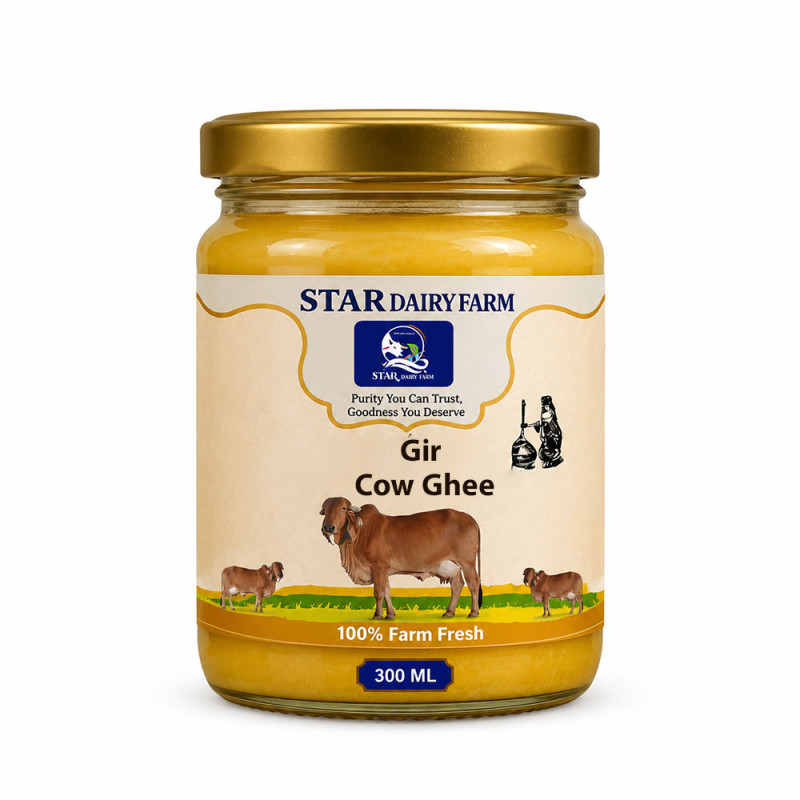
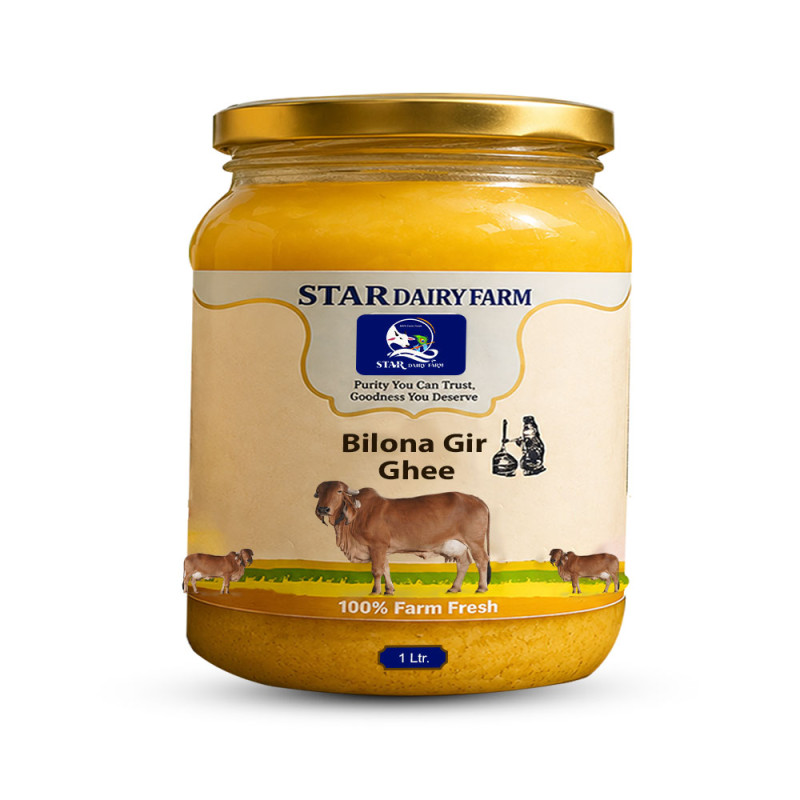
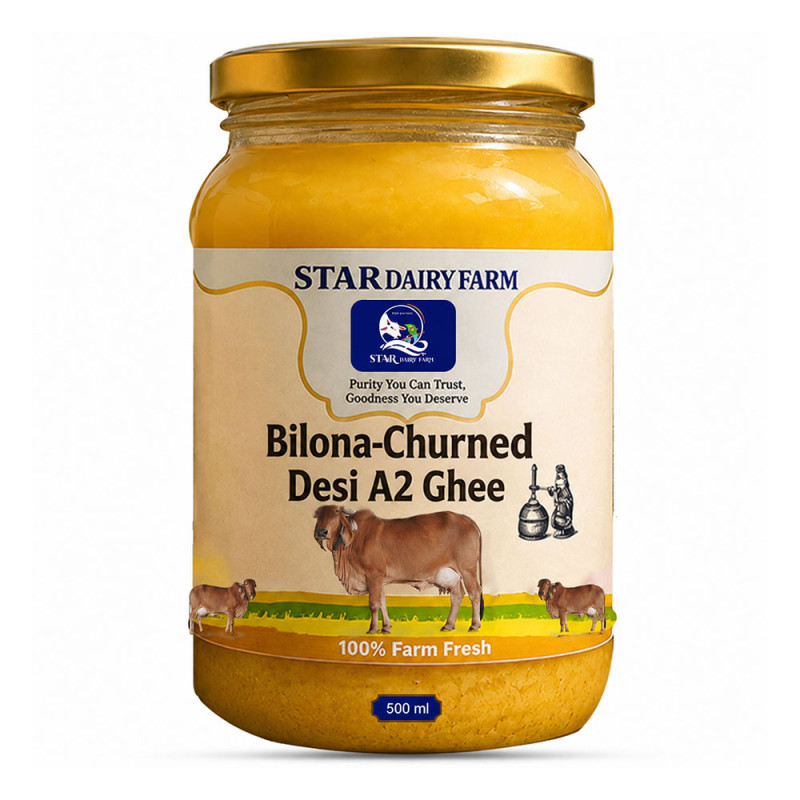
Therefore, when comparing Gir and Jersey ghee, the first difference starts with the genetics and breed of the animal producing the milk.
2. A2 Milk and A1/A2: What Does It Actually Mean?
This is one of the most searched questions around Gir Cow Ghee.
Milk contains several proteins, including beta-casein. The two commonly discussed variants are A1 and A2 beta-casein.
Gir cows are commonly associated with the A2 beta-casein variant. But consumers should avoid assuming that breed name alone is sufficient proof of a particular milk protein profile.
Similarly, it is not accurate to make a blanket statement that every Jersey cow produces A1 milk. The beta-casein profile can vary between individual animals and genetic lines.
For a customer looking specifically for A2 dairy products, the better approach is to ask the supplier about:
-
Milk source
-
Cow breed
-
Product processing method
-
Testing or verification practices
-
Batch quality controls
-
Packaging and storage
At Star Dairy Farms, we understand that customers buying A2 Gir Cow Ghee want transparency about what they are purchasing.
3. Difference in Ghee Production
This is where the comparison becomes particularly interesting.
Ghee can be produced using different processes. Two broad approaches are:
Traditional Bilona Method
The traditional Bilona process generally involves:
Milk → Curd → Churning → Butter → Clarification → Ghee
In traditional production, milk is first converted into curd. The curd is then churned to separate butter. The butter is subsequently heated to remove moisture and milk solids, producing ghee.
This process is labour-intensive and requires more time than many modern industrial methods.
Direct Cream/Butter Method
Modern dairy operations may separate cream from milk, process the cream into butter, and then clarify the butter into ghee.
This method can be more efficient for large-scale production.
The important difference is therefore not simply Gir vs Jersey. The actual processing method can have a major influence on the final product.
At Star Dairy Farms, our emphasis is on producing and supplying quality-focused Gir Cow Ghee while maintaining attention to sourcing, hygiene and processing.
4. Taste and Aroma
Taste is one of the easiest differences for consumers to notice.
Properly prepared Gir Cow Ghee can have a rich, characteristic dairy aroma with a pleasant, traditional ghee flavour. Ghee made through traditional processing may also have a distinctive roasted and nutty sensory profile.
Jersey Cow Ghee can also have a rich buttery taste and aroma.
However, the final flavour is influenced by several factors:
- Cow breed
- Animal feed
- Milk freshness
- Fat content
- Fermentation
- Churning method
- Heating temperature
- Processing time
- Storage conditions
So, saying that breed alone determines taste would be an oversimplification.
5. Colour Difference
Consumers often expect pure Gir Cow Ghee to have a particular golden colour.
In reality, ghee colour can naturally vary.
The colour may be influenced by:
- Breed
- Feed
- Season
- Milk composition
- Processing conditions
- Natural pigments in the feed
Therefore, a darker or lighter colour by itself should not be treated as proof of purity.
At Star Dairy Farms, we believe customers should evaluate ghee using multiple quality indicators rather than relying only on colour.
6. Fat Content and Milk Composition
Jersey cows are well known for producing milk with comparatively high milk-fat content. Gir cow milk also contains naturally occurring milk fat, but its composition can vary depending on the individual cow, nutrition, lactation stage and management practices.
Since ghee is essentially concentrated milk fat with moisture and non-fat components largely removed during clarification, the quality of the original milk and the efficiency of processing are both important.
This is why a good ghee supplier should pay attention to the complete chain:
Cow → Feed & Care → Milk → Processing → Ghee → Packaging → Storage
7. Traditional Gir Cow Ghee vs Commercial Ghee
Another important point is that traditional processing and breed are two different things.
For example, Gir cow milk can be processed using modern dairy equipment, while milk from another breed can potentially be used in a traditional churning process.
Therefore, when buying Gir Cow Ghee, customers should ask:
"Is this actually made from Gir cow milk, and how is the ghee produced?"
This question is more useful than simply asking whether the label says "A2."
At Star Dairy Farms, our business is built around supplying A2 Gir Cow Ghee to customers looking for a traditional Indian dairy product with a clear focus on sourcing and quality.
8. Which Ghee Is Better: Gir Cow Ghee or Jersey Cow Ghee?
There isn't a universal answer that says one breed's ghee is automatically better for every person.
If your priority is specifically:
- Indigenous Indian cow breed
- Gir cow milk
- A2 milk positioning
- Traditional dairy practices
- Rich natural aroma
- Traditional Indian cooking
then Gir Cow Ghee can be a suitable choice.
If your priority is simply good-quality cow ghee at a competitive price, then properly produced ghee from other dairy breeds can also be considered.
Ultimately, purity, sourcing, processing, testing, hygiene and storage should matter alongside breed.
9. Why Choose A2 Gir Cow Ghee from Star Dairy Farms?
At Star Dairy Farms, we understand that customers are becoming more careful about where their food comes from.
They don't simply want a jar labelled "ghee." They want to know:
- Where did the milk come from?
- Which cow breed was used?
- How was the ghee made?
- Is the product handled hygienically?
These are reasonable questions.
Our focus as an A2 Ghee Supplier is to provide Gir Cow Ghee with attention to sourcing and product quality.
We focus on:
Gir Cow Milk Sourcing
Our product positioning is centred around milk sourced from Gir cows for producing Gir Cow Ghee.
Quality-Oriented Processing
We pay attention to the processing stages so that the natural characteristics of ghee are maintained as much as possible.
Traditional Approach
Where applicable, traditional dairy practices such as curd-based processing and churning are important parts of the product story.
Hygiene and Handling
Clean handling, suitable packaging and proper storage are essential for maintaining ghee quality.
Customer Transparency
We believe customers should be able to make purchasing decisions based on meaningful product information rather than exaggerated health claims.
10. How to Identify Good-Quality Gir Cow Ghee?
If you are buying Gir Cow Ghee online or from a supplier, don't judge it only by the words "A2" or "Gir."
Consider these factors:
Check the Ingredients
A quality ghee product should have a clear ingredient declaration.
Ask About the Milk Source
Find out whether the supplier can explain where the milk comes from.
Understand the Production Method
Ask whether the product is made through Bilona/traditional processing, cream separation, butter clarification, or another method.
Check Packaging
The container should be properly sealed and suitable for food storage.
Look at the Manufacturer/Supplier Details
A genuine supplier should provide appropriate business and product information.
Check Batch and Regulatory Information
For packaged food products in India, check the applicable food-label information, including FSSAI details where required.
Don't Judge Only by Colour
Natural ghee can vary in colour.
Don't Believe Every Health Claim
A2 ghee should not be marketed as a cure for diseases or as a guaranteed solution for weight loss, diabetes, cholesterol or other medical conditions.
11. Is Gir Cow Ghee Suitable for Daily Cooking?
Ghee has been an important part of Indian cooking for generations. It can be used in:
- Dal
- Roti
- Paratha
- Khichdi
- Rice
- Halwa
- Traditional sweets
- Vegetable preparations
- Tempering
However, ghee is still a concentrated source of fat and calories. The appropriate quantity depends on a person's overall diet, energy requirements and health circumstances.
For everyday use, the focus should be on moderation and a balanced diet, rather than assuming that more ghee is automatically better.
12. Why Production Method Matters More Than Many People Realize
Imagine two jars of ghee.
One comes from Gir cow milk but is poorly handled.
The other comes from a different cow breed but is produced from clean, good-quality milk and processed under proper hygienic conditions.
Would simply knowing the breed tell you everything about the quality?
No.
This is why responsible dairy businesses need to look beyond marketing terms.
At Star Dairy Farms, we consider the complete production journey important—from milk sourcing to processing and packaging.
Gir Cow Ghee vs Jersey Cow Ghee: Final Comparison
| Feature | Gir Cow Ghee | Jersey Cow Ghee |
|---|---|---|
| Breed | Indigenous Indian Gir | Jersey dairy breed |
| Milk source | Gir cow | Jersey cow |
| A2 association | Commonly associated with A2 milk | Cannot be assumed; depends on genetics |
| Traditional Indian association | Strong | Comparatively lower |
| Taste | Rich, characteristic ghee flavour | Rich, buttery flavour |
| Colour | Naturally variable | Naturally variable |
| Production | Traditional Bilona or modern methods | Traditional or modern methods |
| Quality determining factors | Breed + milk + feed + processing + hygiene | Breed + milk + feed + processing + hygiene |
| Suitable for cooking | Yes | Yes |
| Main consideration | Authentic Gir sourcing and processing | Quality of milk and processing |
Frequently Asked Questions
1. Is Gir Cow Ghee the same as Jersey Cow Ghee?
No. Both are cow ghee, but they come from different cattle breeds. Their milk characteristics and the resulting ghee can differ depending on breed, feed and processing.
2. Is Gir Cow Ghee always A2?
Gir cows are commonly associated with A2 beta-casein, but consumers should not rely solely on the breed name. A supplier's sourcing and testing practices are important when making an A2 claim.
3. Is Jersey Cow Ghee unhealthy?
Not necessarily. Jersey Cow Ghee is still ghee made from cow's milk. Overall quality depends on the milk, processing, purity and handling. Like other ghee, it should be consumed as part of a balanced diet.
4. Does Bilona ghee always come from Gir cows?
No. Bilona refers to a traditional processing approach, not a specific cow breed. Milk from different breeds can potentially be processed using traditional methods.
5. Why is Gir Cow Ghee often more expensive?
Authentic Gir Cow Ghee can cost more because of factors such as breed-specific sourcing, smaller-scale dairy operations, traditional processing, labour, raw material costs, packaging and quality control.
6. How should Gir Cow Ghee be stored?
Keep ghee in a clean, tightly closed container away from moisture, direct sunlight and excessive heat. Always follow the storage instructions provided on the product label.
7. Can Gir Cow Ghee be used for Indian cooking?
Yes. It can be used for dal, roti, paratha, rice, sweets, tempering and many other traditional preparations.
The difference between Gir Cow Ghee and Jersey Cow Ghee is not simply a matter of saying "one is good and the other is bad."
The breed matters, but so do milk quality, animal management, processing method, hygiene, storage and authenticity.
Gir Cow Ghee has a special place among consumers looking for ghee made from an indigenous Indian cattle breed and associated with A2 milk. For those customers, knowing the source of the milk and understanding how the product is produced is particularly important.
At Star Dairy Farms, our goal as an A2 Gir Cow Ghee Supplier is to make that choice easier by focusing on genuine Gir Cow Ghee, responsible sourcing and quality-oriented processing.
If you are looking for A2 Gir Cow Ghee for household consumption, retail distribution, wholesale supply, or bulk requirements, Star Dairy Farms can help you explore suitable supply options.
Choose your ghee not only by the label, but by understanding its source, production process, and quality.


