
If you are comparing ghee made from curd with ghee made from cream, the difference starts right at the preparation stage. Both methods produce ghee, but the way milk is processed before it becomes ghee is not the same. That difference can affect the taste, aroma, texture, preparation time and the way the final product is positioned in the market.
At Star Dairy Farms, we work with different types of Indian cow ghee, including A2 Cow Ghee, Pure A2 Gir Cow Ghee, Gir Bilona Ghee and A2 Bilona Cow Ghee. Our interest in the traditional Bilona method is closely linked with the way many buyers prefer their ghee to be prepared.
For households, retailers, wholesalers and distributors, knowing the difference between these two methods makes it easier to choose the right product. So, let us look at how curd-made ghee and cream-made ghee differ and why Bilona ghee continues to have a place in the Indian dairy market.
 UDYAM
UDYAM ISO
ISO FSSAI
FSSAI FDA
FDA FDA APPROVED
 APEDA
APEDA IEC
IEC GST
GSTWhat Is Curd Made Ghee?
Curd-made ghee starts with milk that is first converted into curd. Once the curd is ready, it is churned to separate butter. That butter is then heated slowly until the water evaporates and the milk solids separate, leaving behind ghee.
This is the basic idea behind the traditional Bilona method.
The process takes more time than simply separating cream from milk, but it follows a traditional way of making ghee that has been used in Indian households for generations. The churning stage is an important part of the process because the butter is obtained from curd before it is clarified into ghee.
At Star Dairy Farms, our range includes products such as A2 Bilona Cow Ghee, Gir Bilona Ghee and Traditional Bilona Ghee for buyers who specifically look for this style of preparation.
How Curd Made Ghee Is Prepared
The process is fairly straightforward, although it involves several stages:
- Milk is prepared and allowed to set into curd.
- The curd is churned to separate butter.
- The butter is collected and heated.
- Water content evaporates during heating.
- Milk solids separate from the fat.
- The remaining ghee is filtered and packed.
The result is ghee with the characteristic aroma and taste associated with traditionally prepared dairy fat. The final flavour can still vary depending on the milk, processing conditions and storage.
What Is Cream Made Ghee?
Cream-made ghee begins at a different point. Cream is first separated from milk and then processed to obtain butter or ghee, depending on the production method being followed.
This route is commonly suited to larger-scale dairy processing because separating cream allows milk fat to be handled efficiently. It can also reduce the number of stages involved compared with the traditional curd-to-butter process.
That does not mean cream-made ghee is automatically poor in quality. The quality of any ghee depends on several factors, including the milk used, hygiene during processing, heating conditions, filtration, packaging and storage.
The main difference is simply the starting material. Curd-made ghee begins with curd, while cream-made ghee begins with separated cream.
Curd Made Ghee vs Cream Made Ghee
Looking at the two methods side by side makes the difference easier to see.
| Factor | Curd Made Ghee | Cream Made Ghee |
|---|---|---|
| Starting material | Curd made from milk | Separated cream |
| Traditional connection | Strong | Lower |
| Common method | Bilona process | Cream separation process |
| Taste | Rich and traditionally aromatic | Can range from mild to rich |
| Aroma | Often more pronounced | Can be lighter |
| Production time | Usually longer | Generally faster |
| Processing stages | More traditional stages | More streamlined |
| Common positioning | Bilona and traditional ghee | Regular and commercial ghee |
| Buyer preference | Often chosen for traditional character | Often chosen for regular use and commercial supply |
There is no single answer that works for every buyer. Someone looking for traditional preparation may prefer curd-made ghee, while someone buying ghee mainly for everyday cooking may look more closely at price, availability and supply consistency.
Why Curd Made Ghee Is Associated With Bilona Ghee
The word Bilona is closely connected with the traditional process of churning curd to obtain butter.
This is one reason buyers searching for traditional Bilona ghee often pay attention to how the ghee was prepared rather than looking only at the final product. The process itself forms part of what they are buying.
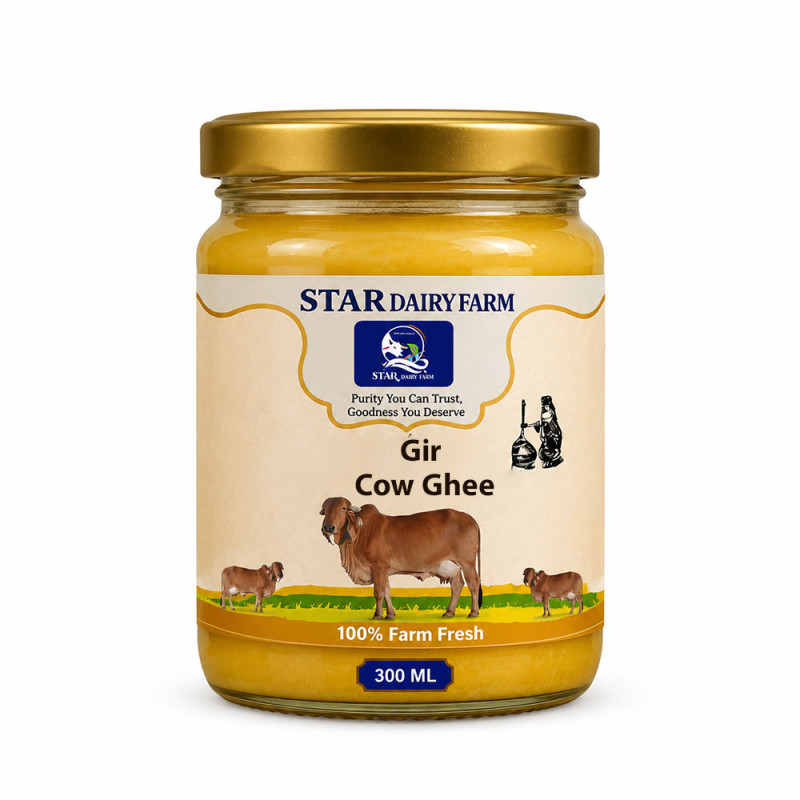
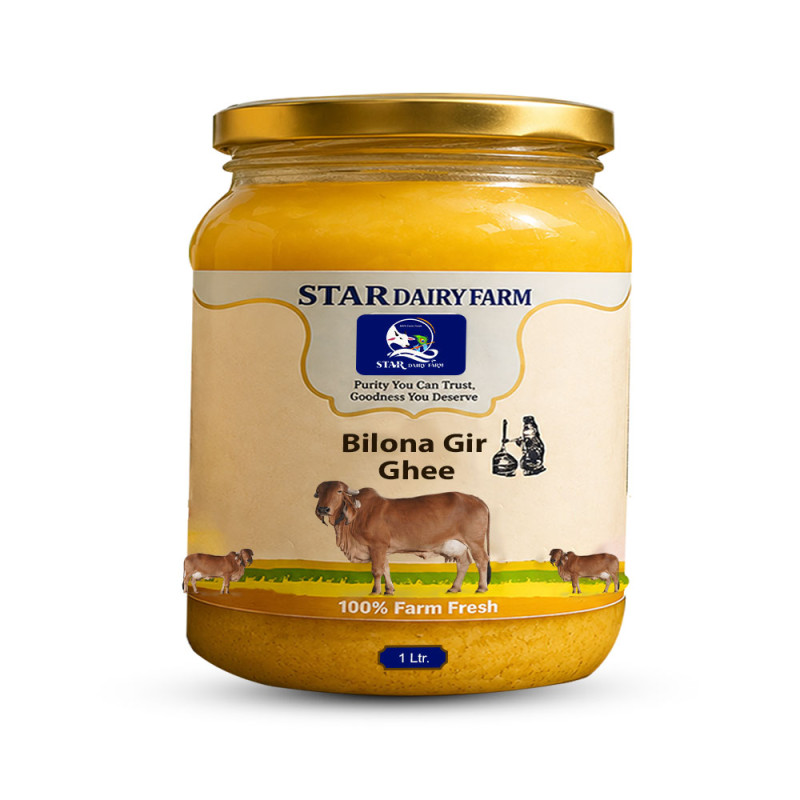
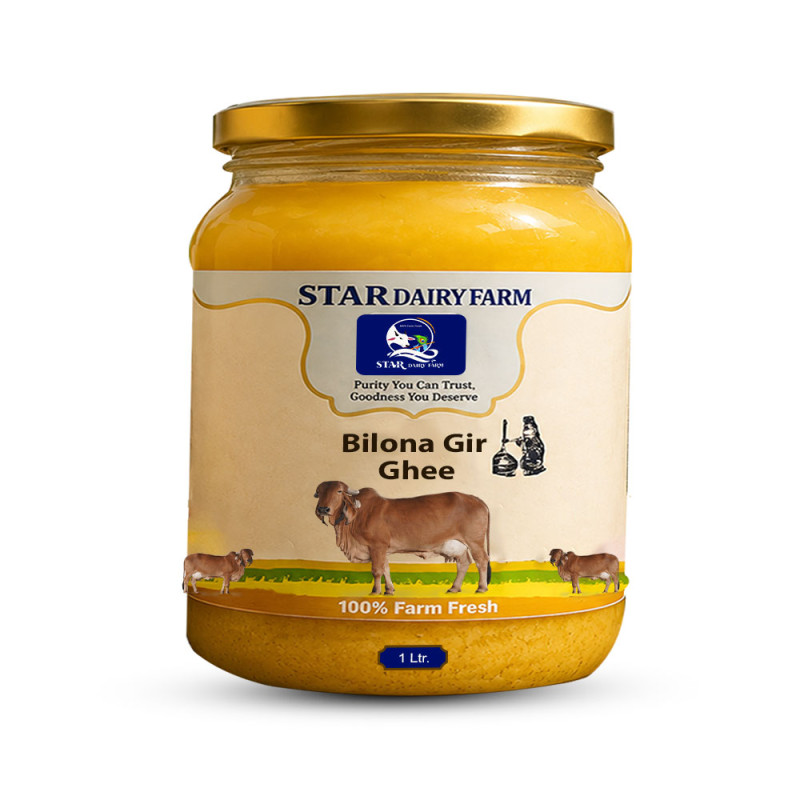
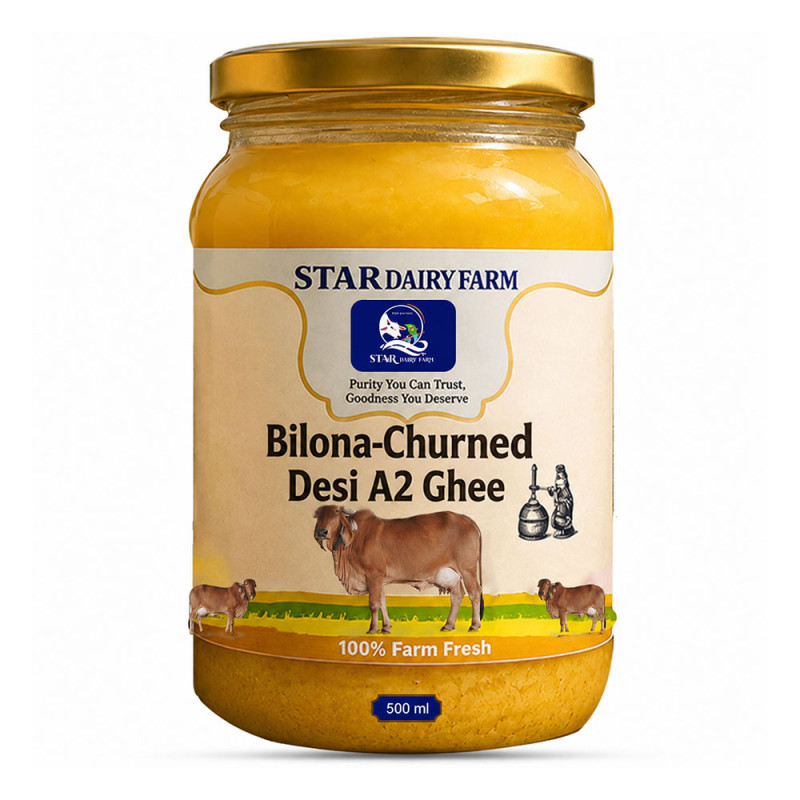
The taste and aroma are also important. Properly prepared Bilona-style ghee can have a noticeable dairy aroma and a rich flavour. It is commonly used with dal, khichdi, rice, roti, paratha, sweets and other Indian foods where the flavour of ghee is easy to notice.
For us at Star Dairy Farms, the Bilona method is an important part of our traditional ghee range. We offer products such as Gir Bilona Ghee and A2 Bilona Cow Ghee for customers looking for this preparation style.
Is Curd Made Ghee More Nutritious?
It is easy to find claims that one type of ghee is automatically healthier than another, but the preparation method alone does not support such a broad conclusion.
Ghee is mainly milk fat. Its composition can be influenced by the source milk, breed, feed and processing. The way the milk is converted into ghee also matters, but it does not mean every curd-made ghee will have a completely different nutritional profile from every cream-made ghee.
The same point applies when discussing A2 Ghee. A2 refers to the type of beta-casein associated with the source milk. It should not be treated as a guarantee of a particular health result.
At Star Dairy Farms, we offer A2 Cow Ghee and Pure A2 Gir Cow Ghee, along with our Bilona products. We prefer to describe these products based on their source and preparation rather than making health claims that go beyond the available product information.
Taste and Aroma: Where Buyers May Notice a Difference
Taste is often one of the first things people notice when comparing different types of ghee.
Curd-made ghee has a traditional flavour profile that many Indian consumers associate with homemade desi ghee. The curd churning stage followed by butter clarification can give the finished product a noticeable dairy aroma.
Cream-made ghee can also have a good flavour. Its taste may be milder or richer depending on the milk and the processing method.
For regular cooking, the choice may come down to personal preference. For buyers specifically looking for the traditional character of Bilona ghee, the curd-to-butter-to-ghee process is usually more relevant.
About Star Dairy Farms
At Star Dairy Farms, our ghee range is built around different preferences in the Indian dairy market. We offer Gir Bilona Ghee, Gir Desi Cow Ghee, Gir A2 Ghee, A2 Cow Ghee, Pure A2 Gir Cow Ghee, Organic Ghee, A2 Bilona Cow Ghee, Traditional Bilona Ghee, Homemade Style Ghee and Farm Fresh Ghee.
We work with wholesalers, distributors, retailers, exporters, supermarkets, Ayurvedic companies and bulk buyers who are looking for Indian cow ghee products.
Our product range gives buyers the option to select between different types of ghee rather than limiting them to one preparation or product category.
Features of Our Ghee Range
- A2 Cow Ghee Products for buyers looking for ghee made from A2 milk
- Pure A2 Gir Cow Ghee for customers specifically seeking Gir cow ghee
- Traditional Bilona Options for buyers who prefer curd-churned preparation
- Gir Cow Ghee Range including Gir A2 and Gir Desi Cow Ghee
- Wholesale and Bulk Supply for distributors retailers and commercial buyers
- Food Grade Packaging for handling and storage
- Quality Checks during production and product handling
- Domestic and International Supply for different buyer requirements
- Multiple Ghee Varieties for different retail and commercial markets
We are based in Jagdalpur, Chhattisgarh, India, and our business was established in 2024. Our range is focused on cow ghee and related dairy products, with products available for both domestic and overseas buyers.
We also hold registrations and certifications listed on our website, including UDYAM Registration, ISO 9001:2015, FSSAI, APEDA, GST and IEC.
Which Ghee Is Better for Wholesale Buyers?
For a wholesale buyer, the right product depends heavily on the customers who will eventually purchase it.
A retailer selling everyday grocery products may want a regular ghee product with consistent availability and pricing. A store that specialises in traditional foods, organic products or Indian dairy products may receive more enquiries for A2 Gir Cow Ghee, Pure Cow Ghee or Bilona Ghee.
The same difference can be seen in export markets. Importers and distributors may have specific requirements for packaging, labeling, shelf life, order quantities and shipping. Product positioning also matters because a buyer looking for traditional Indian ghee may specifically ask about the preparation method.
At Star Dairy Farms, we can discuss product and order requirements with wholesalers, distributors, retailers and exporters based on the type of ghee they are looking for.
Curd Made Ghee or Cream Made Ghee: Which Should You Choose?
If traditional preparation is important to you, curd-made ghee has a clear point in its favour. The milk is first turned into curd, the curd is churned into butter, and the butter is then clarified into ghee. This is the process associated with traditional Bilona ghee.
Cream-made ghee follows a more direct dairy processing route. It can be suitable for regular cooking and commercial applications, especially where streamlined production is preferred.
For someone buying ghee for personal use, taste and preparation style may be the deciding factors. For wholesalers and distributors, the customer segment, pack size, pricing, supply requirements and product positioning also need to be considered.
At Star Dairy Farms, we offer both traditional and other ghee options so buyers can select products according to their market requirements. Our A2 Cow Ghee, Pure A2 Gir Cow Ghee, A2 Bilona Cow Ghee and other products cater to different preferences within the Indian ghee market.
Why Buyers Choose Traditional Bilona Ghee
Traditional Bilona ghee has a particular appeal because buyers can connect the finished product with a recognisable preparation method.
The process starts with milk, moves through curd and butter, and finally produces ghee. That additional stage of churning is what separates the traditional Bilona process from a method that starts with already separated cream.
For customers who specifically want traditionally prepared Indian ghee, this distinction matters. It also gives retailers and distributors a product category that can be positioned separately from regular cooking ghee.
Our Traditional Bilona Ghee, Gir Bilona Ghee and A2 Bilona Cow Ghee are part of the range we supply for this market.
Final Takeaway
The comparison between curd-made ghee and cream-made ghee comes down mainly to how the product is prepared and what the buyer expects from it.
Curd-made ghee follows the traditional route of setting milk into curd, churning it into butter and then clarifying the butter into ghee. Cream-made ghee starts with separated cream and follows a different processing route. Both can produce ghee suitable for cooking, but they appeal to different preferences.
If you are looking specifically for A2 Ghee, Pure A2 Gir Cow Ghee, A2 Bilona Cow Ghee or Traditional Bilona Ghee, the preparation method becomes an important part of the buying decision.
At Star Dairy Farms, we keep these different preferences in mind while supplying our ghee range to households, retailers, wholesalers, distributors and export buyers. For bulk or commercial requirements, buyers can contact us to discuss the suitable ghee product and order requirements.
Frequently Asked Questions
1. Is curd-made ghee better than cream-made ghee?
Curd-made ghee is often preferred by buyers who want traditional Bilona preparation, a pronounced dairy aroma and the traditional character associated with Indian desi ghee. Cream-made ghee can also be suitable for cooking when it is produced and stored properly.
2. What is Bilona ghee?
Bilona ghee is traditionally prepared by first converting milk into curd, churning the curd to obtain butter and then heating the butter to make ghee. The churning stage is the main feature that distinguishes this method from cream-based processing.
3. Is all A2 ghee made using the Bilona method?
No. A2 refers to the beta-casein type associated with the source milk, while Bilona refers to a method of preparing ghee. A2 milk can be used to make ghee through different processing methods.
4. Does curd-made ghee have a different taste?
It can have a more noticeable traditional dairy aroma and flavour. The final taste still depends on factors such as the milk used, preparation, heating and storage.
5. Which ghee is suitable for traditional Indian cooking?
Both types can be used for cooking, but buyers looking for the traditional flavour and preparation style often prefer Bilona ghee. It can be used in dal, rice, khichdi, roti, paratha, sweets and other Indian recipes.
6. What types of ghee do we offer at Star Dairy Farms?
Our range includes A2 Cow Ghee, Pure A2 Gir Cow Ghee, Gir A2 Ghee, A2 Bilona Cow Ghee, Gir Bilona Ghee, Gir Desi Cow Ghee, Organic Ghee, Traditional Bilona Ghee, Homemade Style Ghee and Farm Fresh Ghee.
7. Do we supply ghee for wholesale orders?
Yes. We work with wholesalers, distributors, retailers, exporters, supermarkets, Ayurvedic companies and other bulk buyers. Buyers can contact us to discuss their product, packaging and order requirements.


